


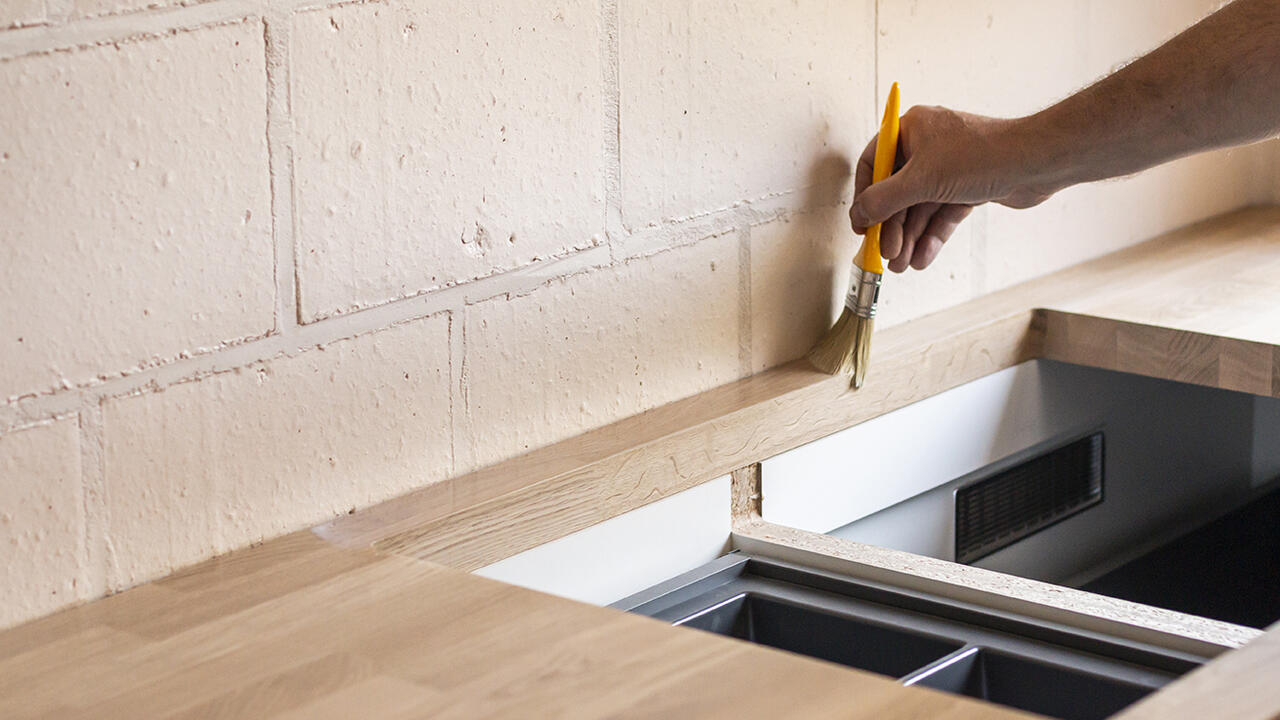
For wooden kitchen worktops, it’s recommended to use a natural, non-toxic hard wax oil. It soaks into the wood and protects against water and everyday spills, while keeping the wood’s natural look and feel.
Look for three things: a finish that is certified for food contact, that is hard-wearing, and that is easy to repair.
What is worktop oil?
Worktop oil is a penetrating wood finish made for kitchen and utility surfaces. Like other hard wax oils, it is a blend of natural oils and hard waxes. The oil soaks into the wood and the waxes sit near the surface, where they repel water and stand up to daily wear.
On a worktop, this matters more than anywhere else in the house, because the surface meets water, heat, knives and food every day. The oil does not sit on top as a film. It works into the timber, so the wood keeps its grain and feel, and a worn or marked patch can be repaired in place rather than replacing the whole top.
Discover worktop oil by Rubio Monocoat
Is worktop oil ‘food safe’?
This is the first question for any kitchen surface, and the honest answer is: it depends on the product, so make sure to always check a product’s certification.
Worktop oils are usually not labeled 'food safe’, but some oils have been ‘certified for food contact’, which means they won’t transfer any hazardous substances from the wood into the food on top. This is what truly matters.
Next to this, there is also a timing factor to think about. While the oil is still curing, it has not fully hardened. So always wait until it is properly cured before it meets food. Once cured, a certified worktop oil is inert and safe for direct food contact.
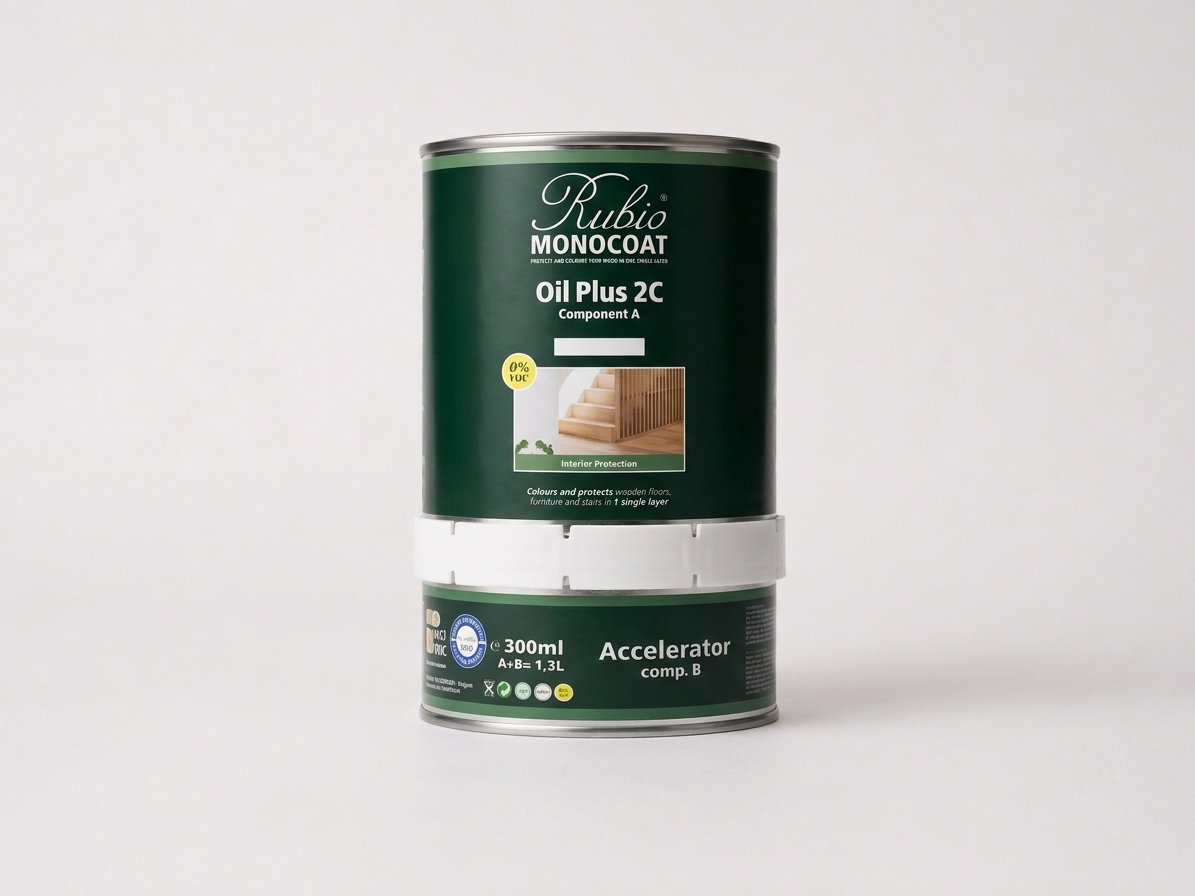
Oil Plus 2C by Rubio Monocoat is 0% VOC and, once fully cured, it is certified for food contact (European Framework Regulation 1935/2004 and FDA 21 CFR 175.300). It is also toy-safe under EN 71-3. In plain terms, it is safe for cutting boards, kitchen worktops and tabletops that meet food.
What makes a good kitchen worktop oil?
A worktop has more to endure than almost any other wood surface in your home, so not just any oil will do. Look for these qualities:
- Certified for food contact: non-negotiable for a surface where you prepare food.
- Water & heat resistant: a kitchen worktop sees spills, steam and hot pans, so the finish must cope with all three once cured.
- Hard-wearing: it needs to resist the daily scuffing of plates, pans and utensils.
- Easy to clean: occasional spots, rings or stains can usually be lifted with a limescale remover, tannin remover or grease remover, without touching the rest of the finish.
- Repairable in place: the best worktop oils let you fix a ring mark or a scratch on the spot, without redoing the whole surface.
- Natural look, simple upkeep: it should keep the wood looking like wood and be easy to clean and refresh.
If you want the hardest, fastest-curing result, opt for a two-component hard wax oil, such as Oil Plus 2C by Rubio Monocoat.
The pros and cons of oiling a worktop
Oiling is the traditional way to finish a solid wood worktop, and it remains the most practical. Here is why.
- Keeps the natural look and feel of real wood
- A ‘kitchen-safe’ option makes it fine for chopping and food preparation
- Water & heat resistant once cured
- Marks, rings and small scratches repair in place, no new worktop
- Simple to clean, and easy to refresh with a maintenance coat
- A single layer with a two-component oil, with low consumption
- Needs occasional re-oil
- Wants spills wiped promptly, especially near the sink
- The wood must be sanded and clean before the first coat
- Strong stains (e.g. red wine) can mark if left to sit
- Gives a natural matte to satin look, not a high-gloss sealed surface. But specific additions to the oil (e.g. SheenPlus) can add a refined sheen.
How to oil a kitchen worktop
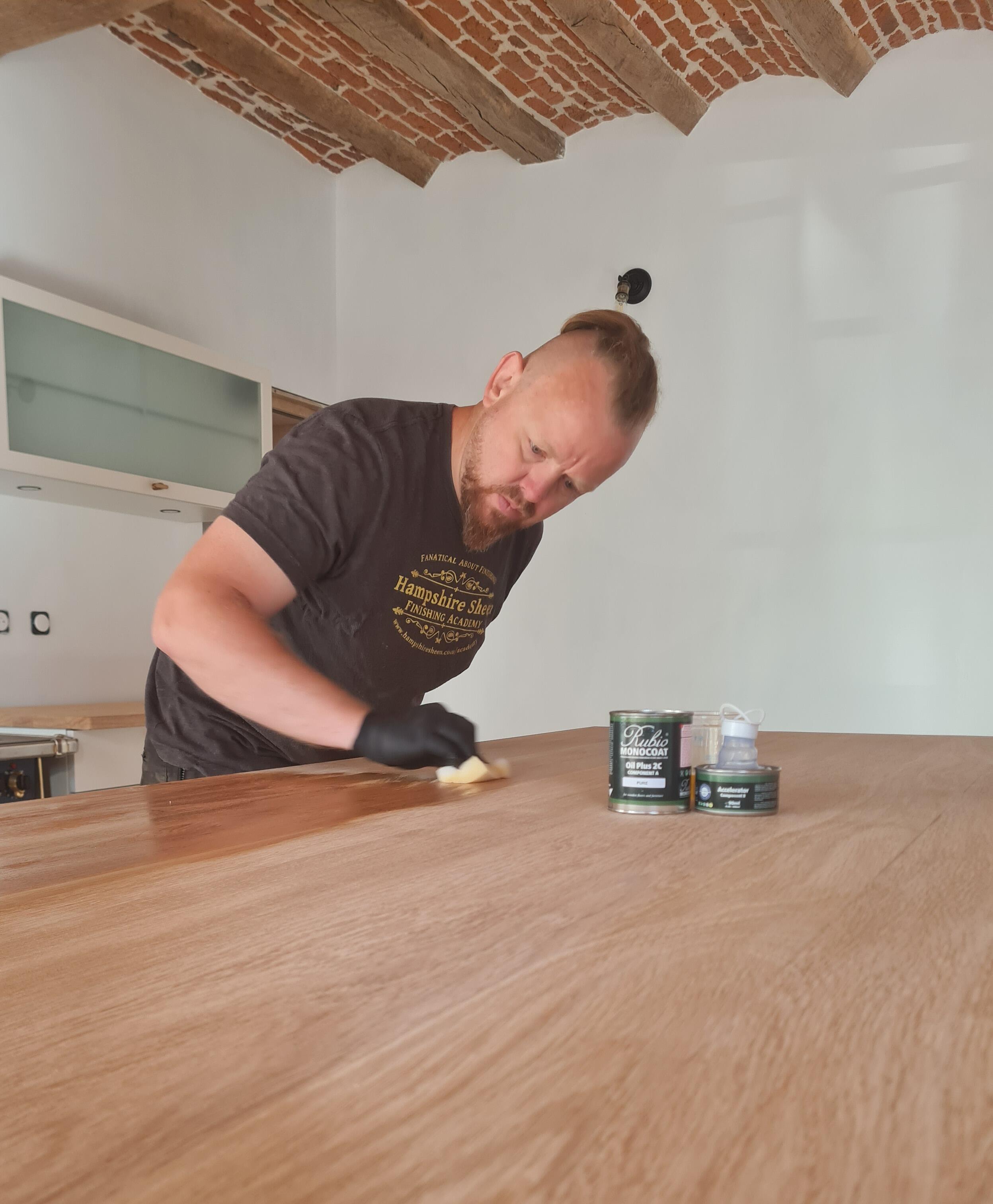
Whether your worktop is brand new or being refreshed, the method is the same. Always check the technical data sheet for your specific product and wood.
-
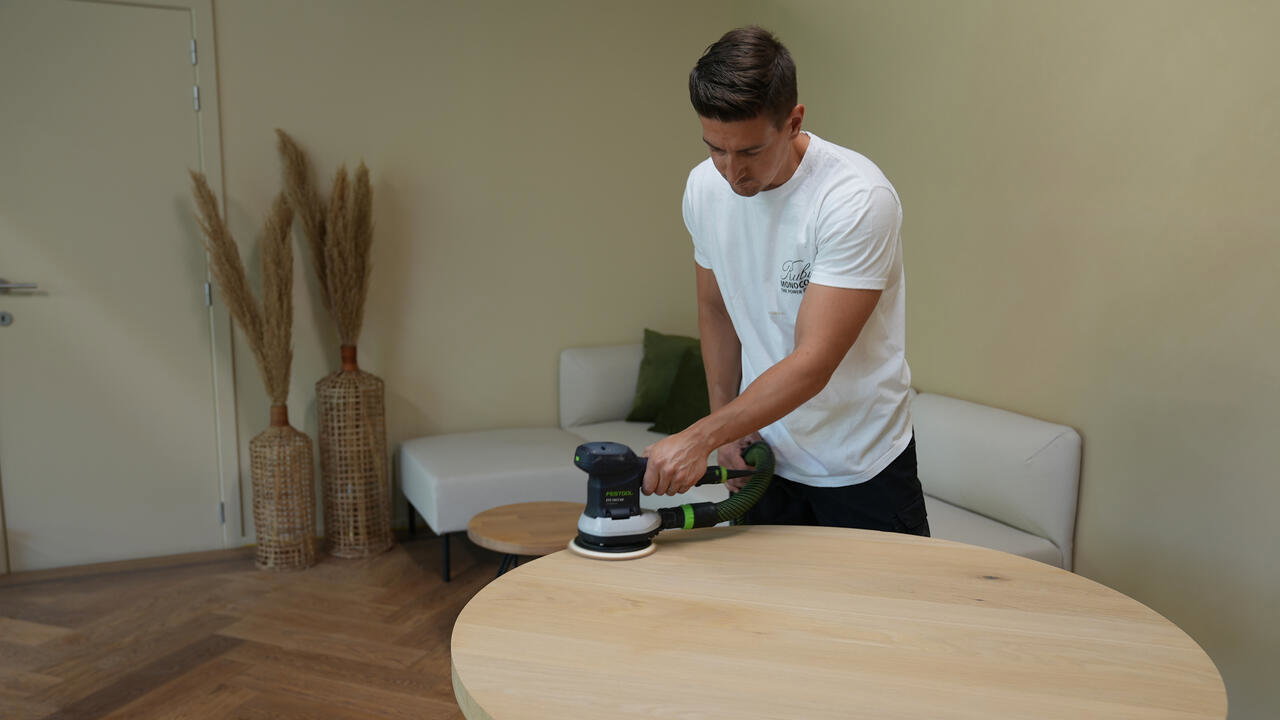
01 Sand the surface.
Work to bare, clean wood and finish at 100 to 150 grit. Sand evenly and do not polish the wood closed with too fine a grit, or the oil cannot soak in.
-
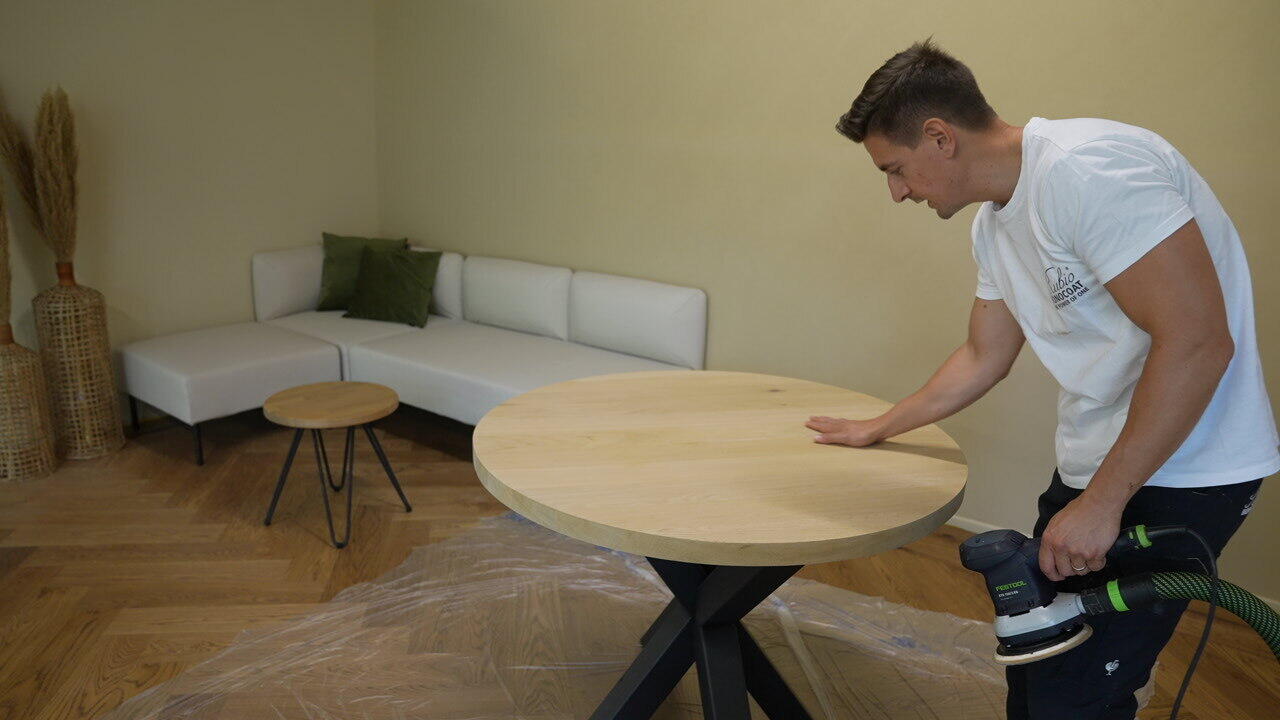
02 Remove all the dust.
Vacuum, then wipe the surface with Cleaner and let it dry. Any dust or grease weakens the bond.
-
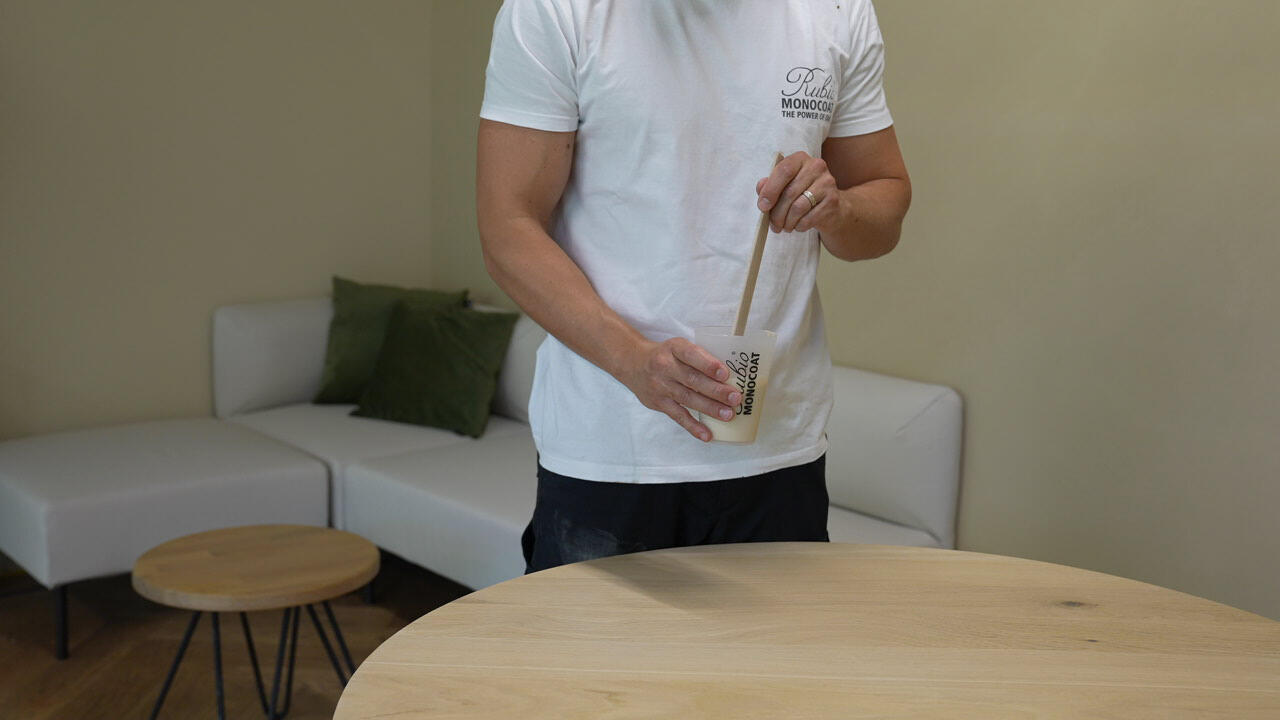
03 Mix the two components.
Stir Component A, then mix in Component B at roughly three parts A to one part B. Once mixed, use it within 4 to 6 hours.
-
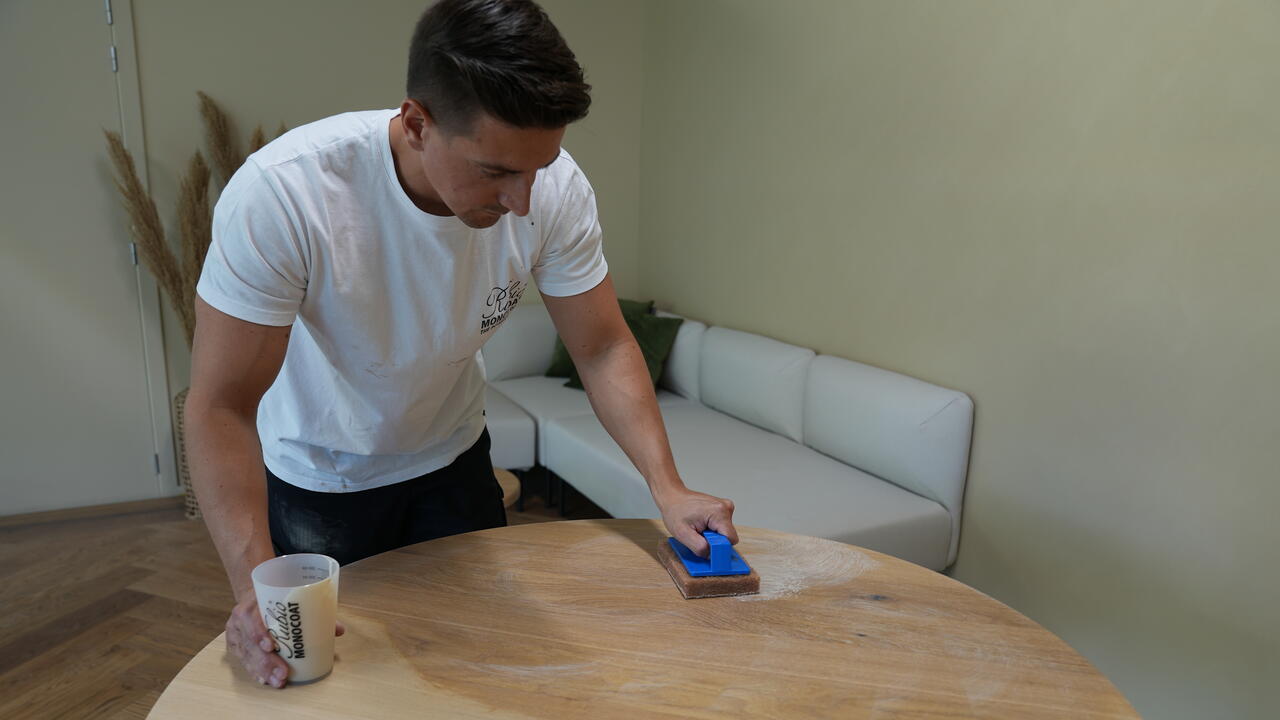
04 Apply a thin, even coat.
Work along the grain with a brush or pad. Do not skip the edges, and oil the sink and appliance cut-outs well, as exposed end grain soaks water the fastest.
-
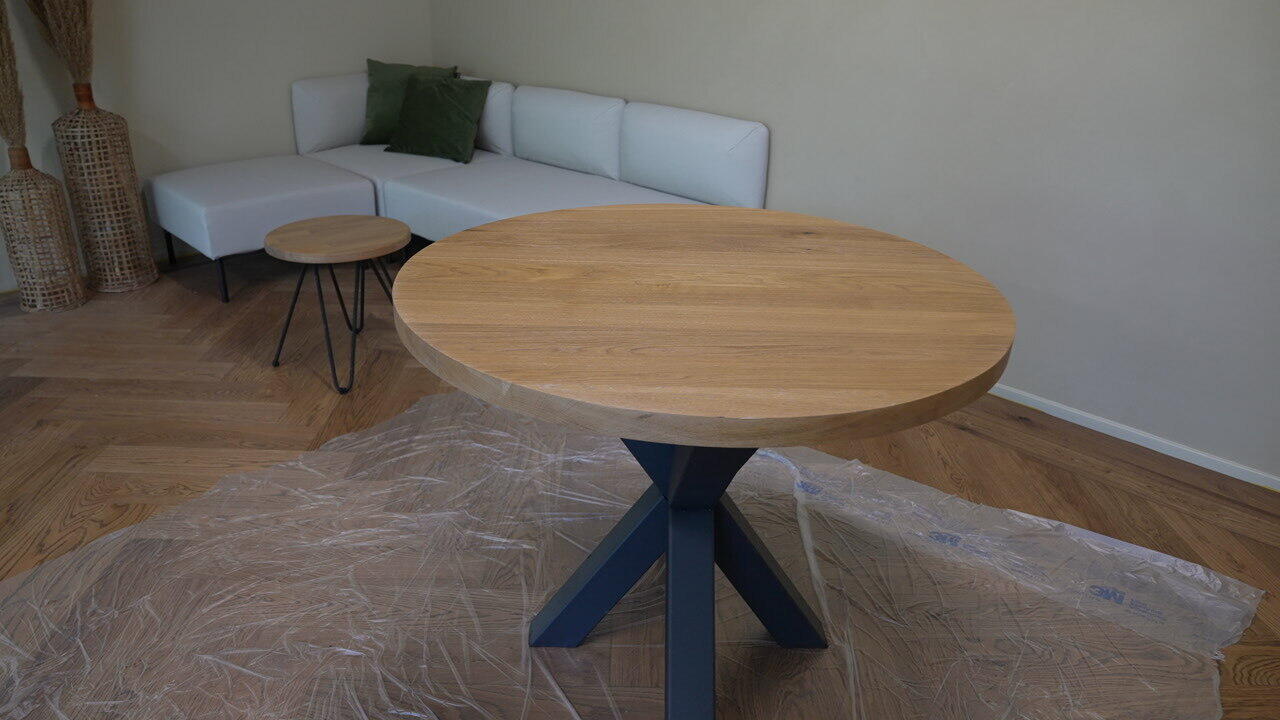
05 Let it absorb.
Give the oil a few minutes to penetrate the wood.
-
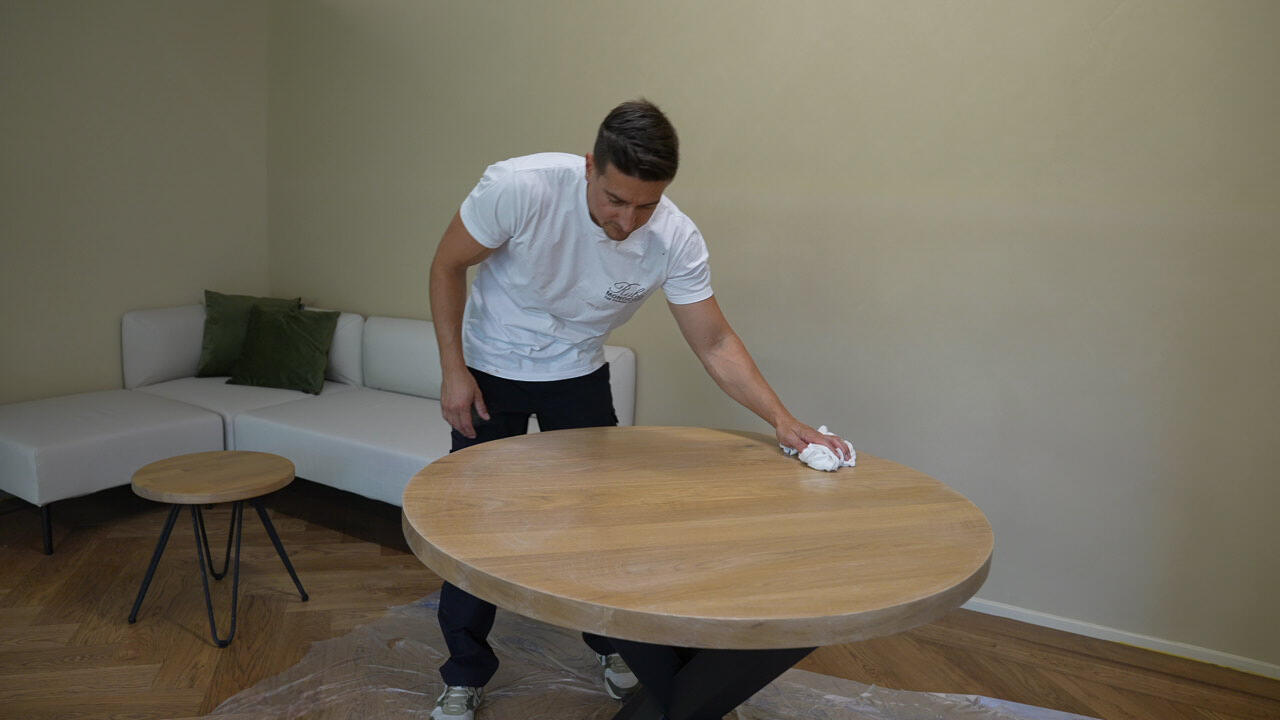
06 Wipe off all the excess.
Within about 30 minutes, remove every drop of surplus with a clean cloth or white pad. The surface should feel dry, not sticky. This step is what separates a good finish from a tacky one.
-
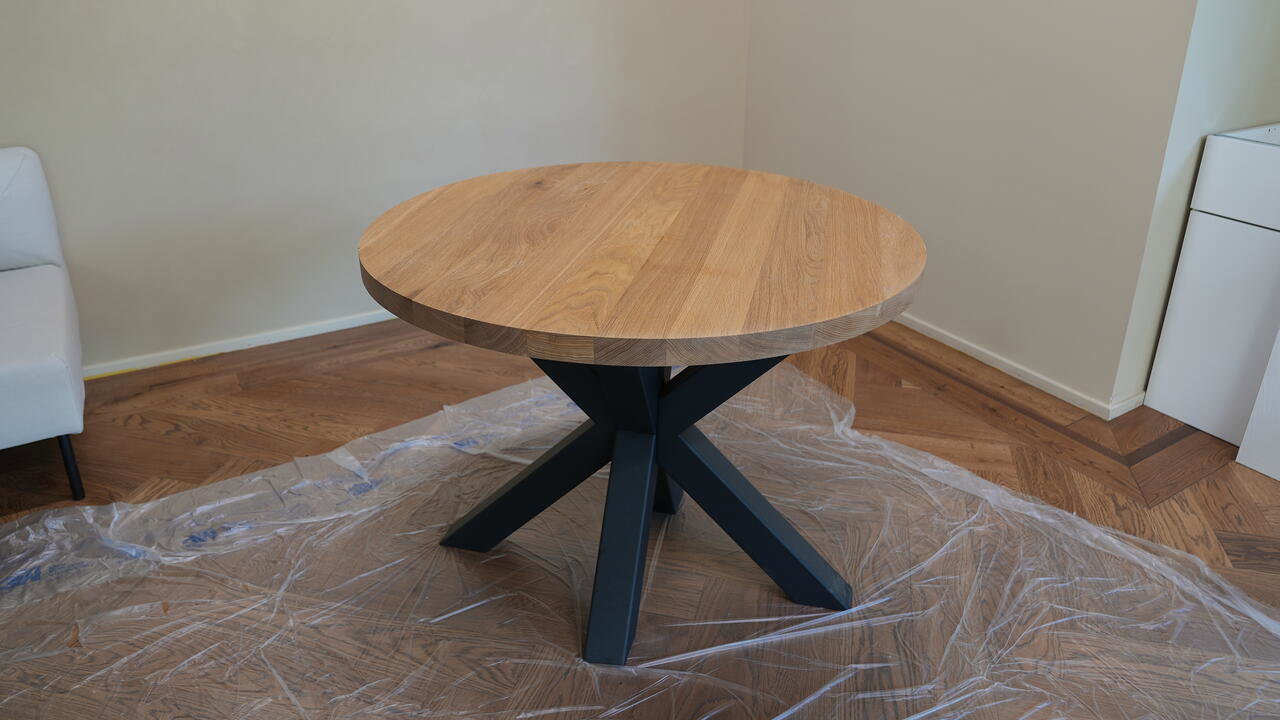
07 Let it cure.
You can resume light use after about 12 hours. The surface will be 80% cured in 2 days, reaching a full cure in 5 to 7 days. Just be sure to keep water and cleaning chemicals away from it for the first 5 days and wait until it is fully cured before using it for food preparation.
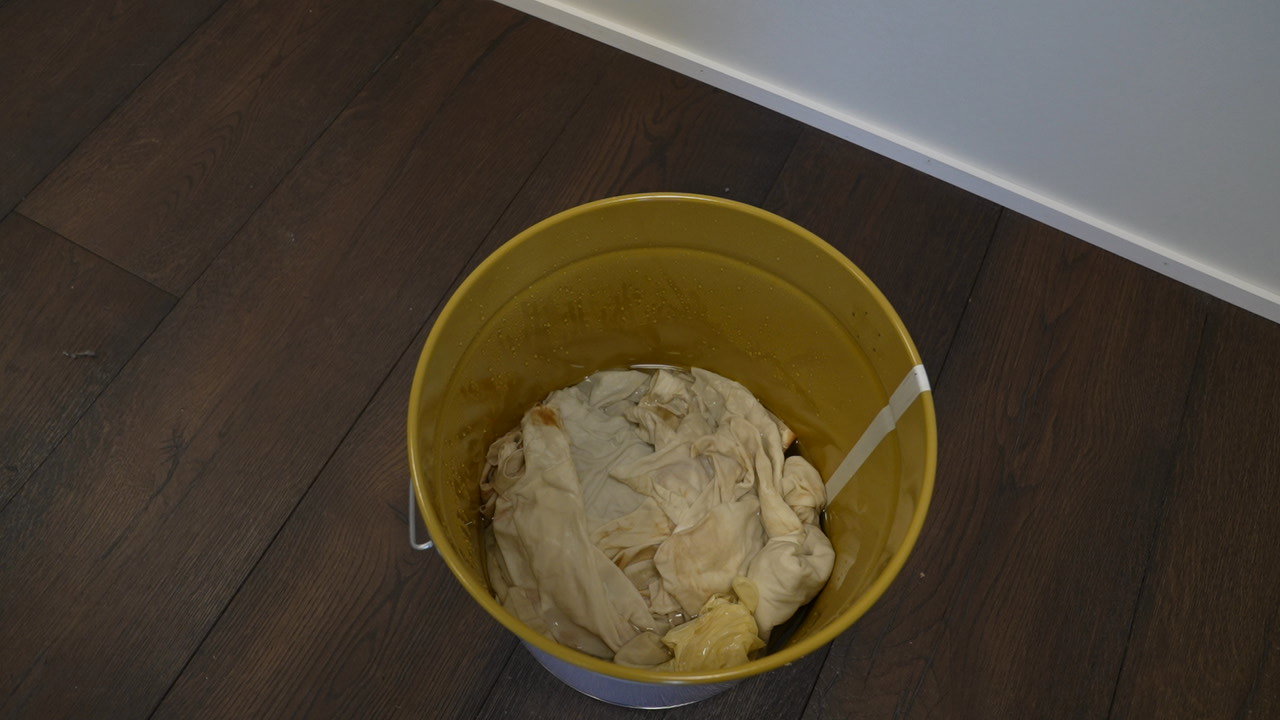
Note: work between 8 and 30 °C. Soak all cloths and pads in water before disposal; oil-soaked rags can self-heat and catch fire.
How to look after an oiled wooden worktop
An oiled worktop is easy to live with and forgiving when something goes wrong.
- Day to day: wipe with a damp cloth and a little mild soap. Avoid abrasive scourers and bleach, and do not leave standing water, especially around the sink and joints.
- Spills: blot strong stains such as red wine, turmeric or oil promptly rather than letting them sit. There are dedicated products available - like a limescale remover, tannin remover or grease remover – to do this.
- Re-oiling: when the surface starts looking a bit dry or water stops beading on it, it’s time for a fresh maintenance coat. Just clean the surface first—there's no need to sand it. On a busy kitchen countertop, you'll likely do this once or twice a year, but lighter-use areas will last much longer.
- Damage: for a ring mark, scorch or knife cut, sand the spot lightly, re-oil, and blend back in.
With proper care, a solid wood worktop can last for decades. If you ever want a completely fresh start, the surface can simply be sanded back to reveal the raw, fresh wood beneath.
The proof: coverage, cure & certifications
A worktop’s two most critical features - food safety and resistance to water and heat – are certified and measurable. Here are the performance figures for Rubio Monocoat Oil Plus 2C.
| Property | Rubio Monocoat Oil Plus 2C |
|---|---|
| VOC content | 0% (certified) |
| Food contact | Compliant once cured (EU 1935/2004 and FDA 21 CFR 175.300) |
| Resistance | Great wear, water and heat resistance |
| Coverage | 30 to 50 m² per litre |
| Drying time | 12 to 24 hours |
| Cure time | 5 days (80% cured in 2 days) |
| Coats needed | A single layer |
| Certifications | GreenGuard Gold, Eurofins Indoor Air Comfort Gold, A+ Label, EN 71-3 (toy safety), ... |
Keep in mind that coverage depends entirely on the type of wood and how it’s prepared, so use these numbers as a general guide. We always suggest making a small sample piece first to calculate your exact usage.
Once the finish is fully cured, it is ‘kitchen-safe’. Just be sure to wait out the full cure (5 days) time before putting your kitchen worktop back into daily action.

Finishing a wooden worktop?
Ready to finish your wooden worktop? Explore our palette of 40 colours or use our stockist locator to find a retailer near you.
To ensure you get the perfect look, we highly recommend ordering a 6 ml sample of Oil Plus 2C to test on a sanded leftover first. The final colour will always vary depending on your specific wood and sanding technique.
Frequently asked questions
What oil should I use on a wooden kitchen worktop?
For a wooden kitchen worktop, use a ‘food contact compliant’ hard wax oil. It soaks into the wood to protect against water, heat and daily wear while keeping the natural look, and it can be repaired in place rather than stripped back.
The one thing to check is that the oil is certified for food contact, since you prepare food on the surface. Oil Plus 2C is a two-component hard wax oil that is 0% VOC, certified for food contact once cured, and protects in a single coat.
Is worktop oil ‘food-safe’?
Some worktop oils are certified for contact with food, and some are not, so always check the product’s certification, and let any oil cure fully before it meets food.
Oil Plus 2C is 0% VOC and, once fully cured, complies with European Framework Regulation EC 1935/2004 and FDA 21 CFR 175.300 for food contact. That means it is safe to use on chopping boards, worktops, and tabletops where food is prepared.
How often should I oil a kitchen worktop?
Re-oil a kitchen worktop when the surface starts to look dry or when water no longer beads on it, which on a busy worktop is usually once or twice a year.
Lighter-use surfaces need it less often. A refresh coat (e.g. with Universal Maintenance Oil) needs a clean, dry surface, and a thin coat of oil wiped on and then wiped back off, with no sanding. The areas around the sink and appliances wear first, so check those most often.
Can I apply worktop oil in a single coat?
It depends on the product. Many worktop oils are saturation finishes that need two coats, but a molecular-bonding oil like Oil Plus 2C protects in a single coat.
With Rubio Monocoat Oil Plus 2C, the oil bonds chemically with the top fibres of the wood, so the wood takes up what it needs in one pass, and a second coat adds nothing. The key to a good single coat is wiping off all the excess, so the surface feels dry rather than sticky.
Does worktop oil protect against water and heat?
Yes. Once fully cured, a good worktop oil resists water and everyday heat, which is why oil is the traditional finish for solid wood worktops.
Oil Plus 2C is rated for strong water and heat resistance once cured. Even so, no wood finish likes standing water or a pan taken straight off the stove, so wipe up spills promptly and use a trivet under very hot pans.
How long before I can use the worktop and put food on it?
A freshly oiled worktop is ready for light use after about 12 hours, but wait for it to fully cure before preparing food on it, which takes around 5 to 7 days.
Oil Plus 2C is roughly 80% cured after 2 days and fully cured in 5 to 7 days. Keep water and cleaning off the surface for the first 5 days, and wait for full cure before food touches it, so the finish is fully hardened and inert.
